Workshop 04 · Week 11 04

Bringing the Root
to Light

60 Minutes Artist Statement Presentation Format Exhibition Ready
Duration 60 Minutes
Goal Refine your statement. Think spatially. Prepare for Week 12.
Next Up Week 12 · Media Studio Sharing
01

Welcome and Grounding

5 min

You have come a long way to reach this point. You have moved through concept development, made images, done a peer critique, edited a series, and stood up in the room to talk about your work. That is not a small thing.

Week 12 is not a critique, and it is not a performance. It is the first time your work exists in a room with other people's bodies. That is a different kind of moment, and it is worth preparing for.

Today we are shifting from internal creation to external sharing, finding the right words and physical forms to give your rễ-root project a public voice.

"You do not need to have everything finished. Bring what you have, share where you are at, and let us think together about what the work needs."
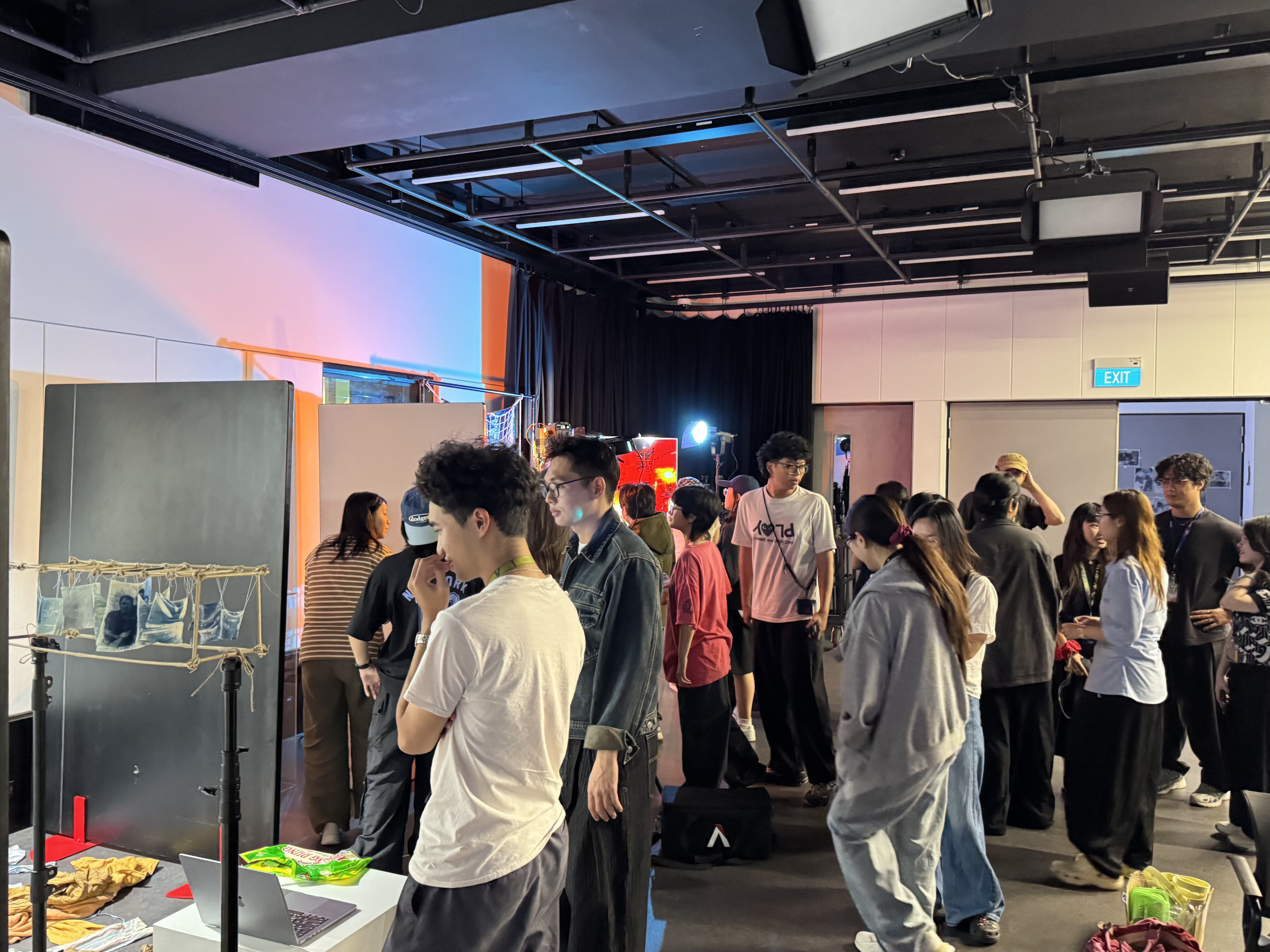
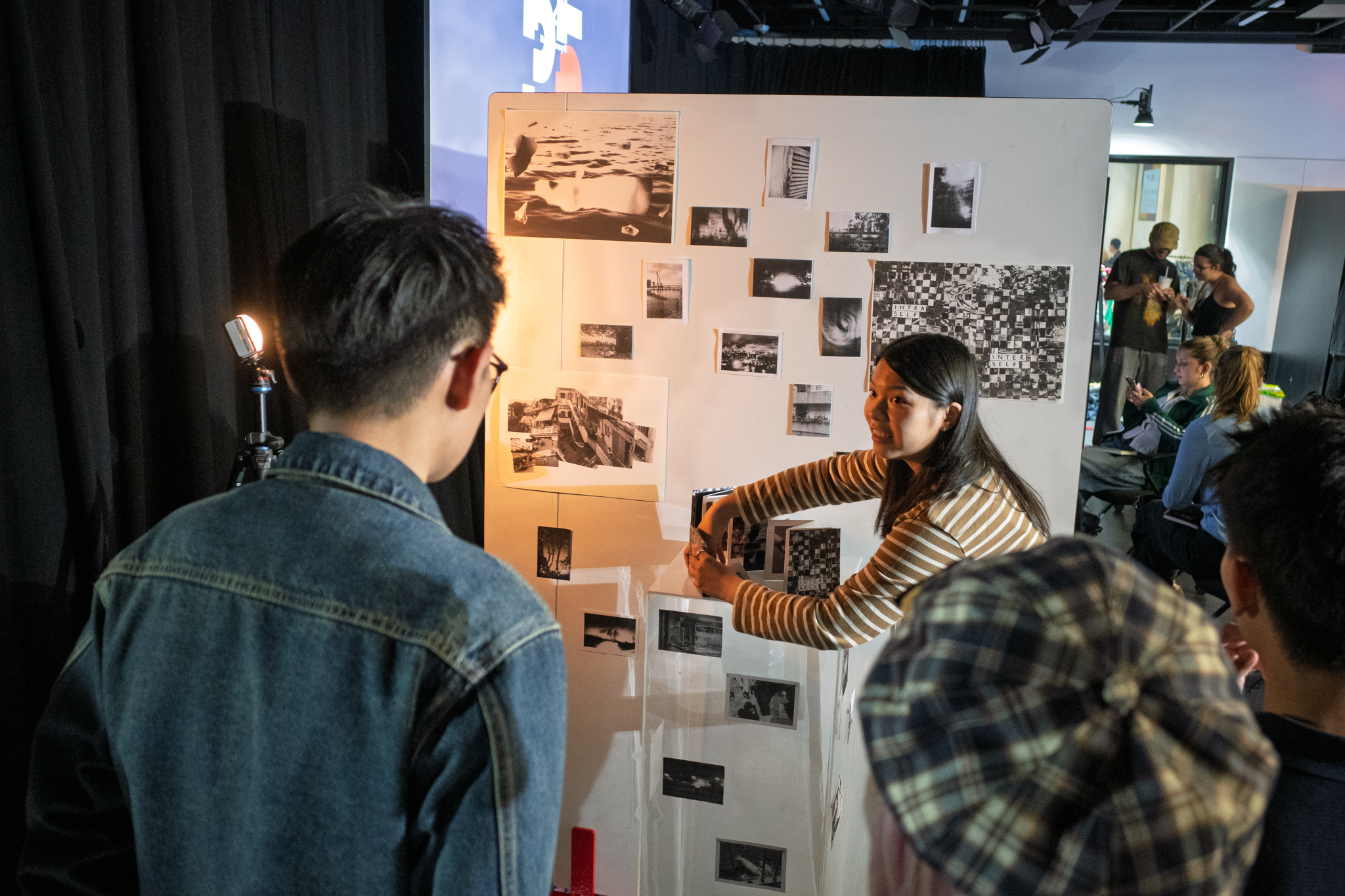
Last semester's rễ-root exhibition, Media Studio, RMIT Vietnam
Last semester's rễ-root exhibition · Media Studio · RMIT Vietnam
02

From Artist Talk to Artist Statement

15 min
Before You Write

You have already found words for your work. In your artist talk, you said things out loud that were honest and direct. The artist statement is a refinement of that, not a replacement. The difference is context: a statement lives near the work, on a wall or in a handout, and it is read by someone who has already seen the photographs.

That reader does not need a description of what is visible. They need to understand where the work came from and what it is reaching toward.

Last semester, each student wrote with real specificity. Anh Le Duc wrote about the scent and texture of bánh tráng dừa as a carrier of the feeling of coming home. An Do Le Gia invited the audience to experiment together using the five senses. These statements worked because they were precise and personal, there was no language in them that could belong to anyone else.

The question: what is the part of your work that only you could say?

Activity 01
Uncovering the Core

Take out a notebook or open a document.

Go back to what you said in your artist talk. What was the single moment where you felt like you were actually saying what the project is about? Write that down, in whatever words come. Do not edit while writing. Follow the thought wherever it goes.

Take 5 minutes to write freely. Then read back what you wrote and underline the one sentence that feels the most true, even if it is rough. That sentence is the foundation. Everything else in a final written statement can be built around it.

10 min · individual writing + refinement
03

Work, Space, and People

20 min
How Placement Changes Everything

The same photograph placed on a phone screen, printed small, and hung at eye level in a room are three different experiences. Presentation is not neutral. It is part of the work.

Look at how last semester's cohort used the space. Each decision about height, surface, and structure created a different kind of encounter between the work and the people who entered.

Prints pinned to a partition wall, viewers in conversation
Eye-level prints on a partition wall. Intimate and conversational, viewers stand upright and talk.
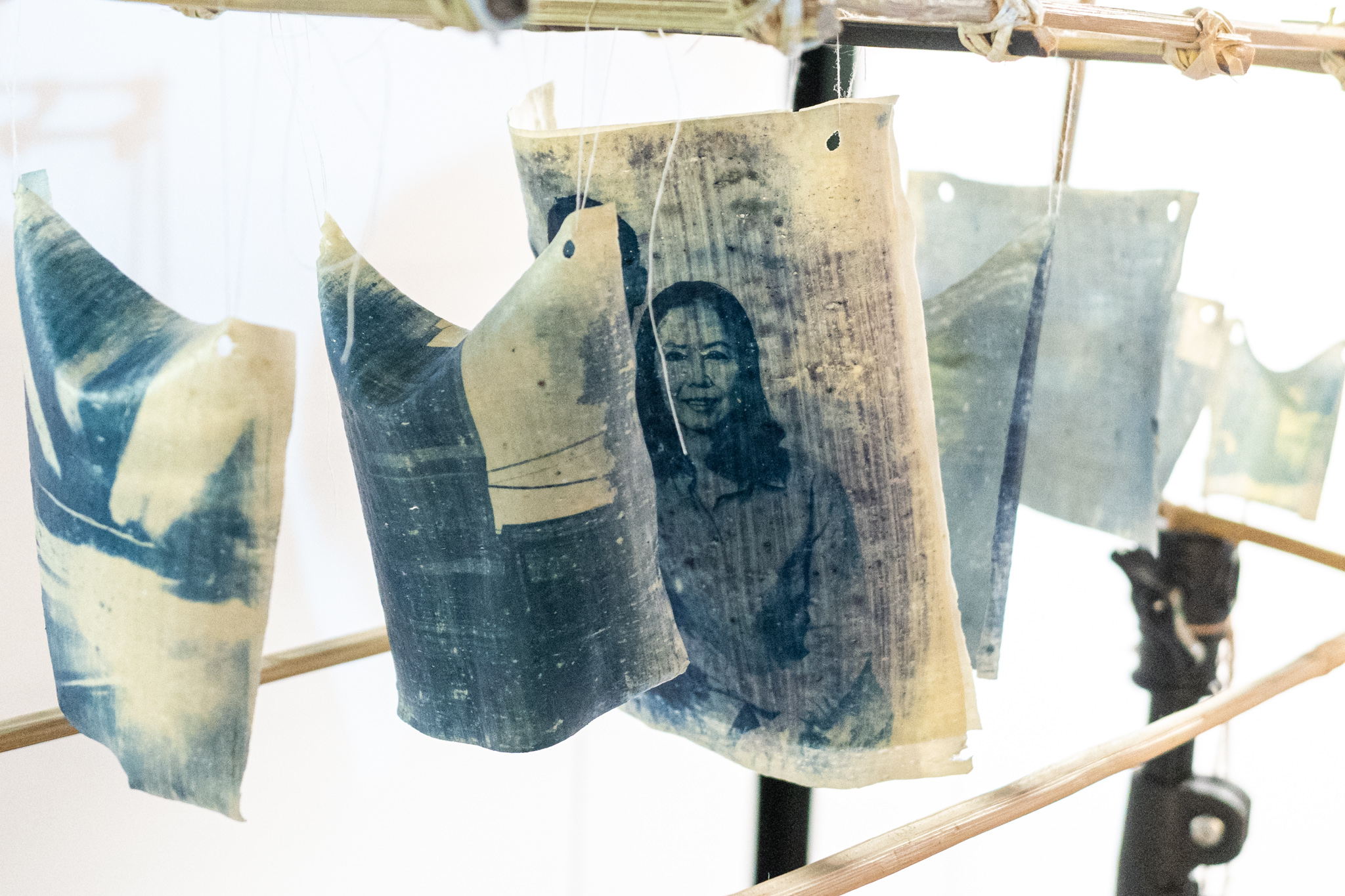
Cyanotype prints hanging from a bamboo structure
Cyanotypes hanging from above. Bodily and slow, the viewer steps close and looks up.
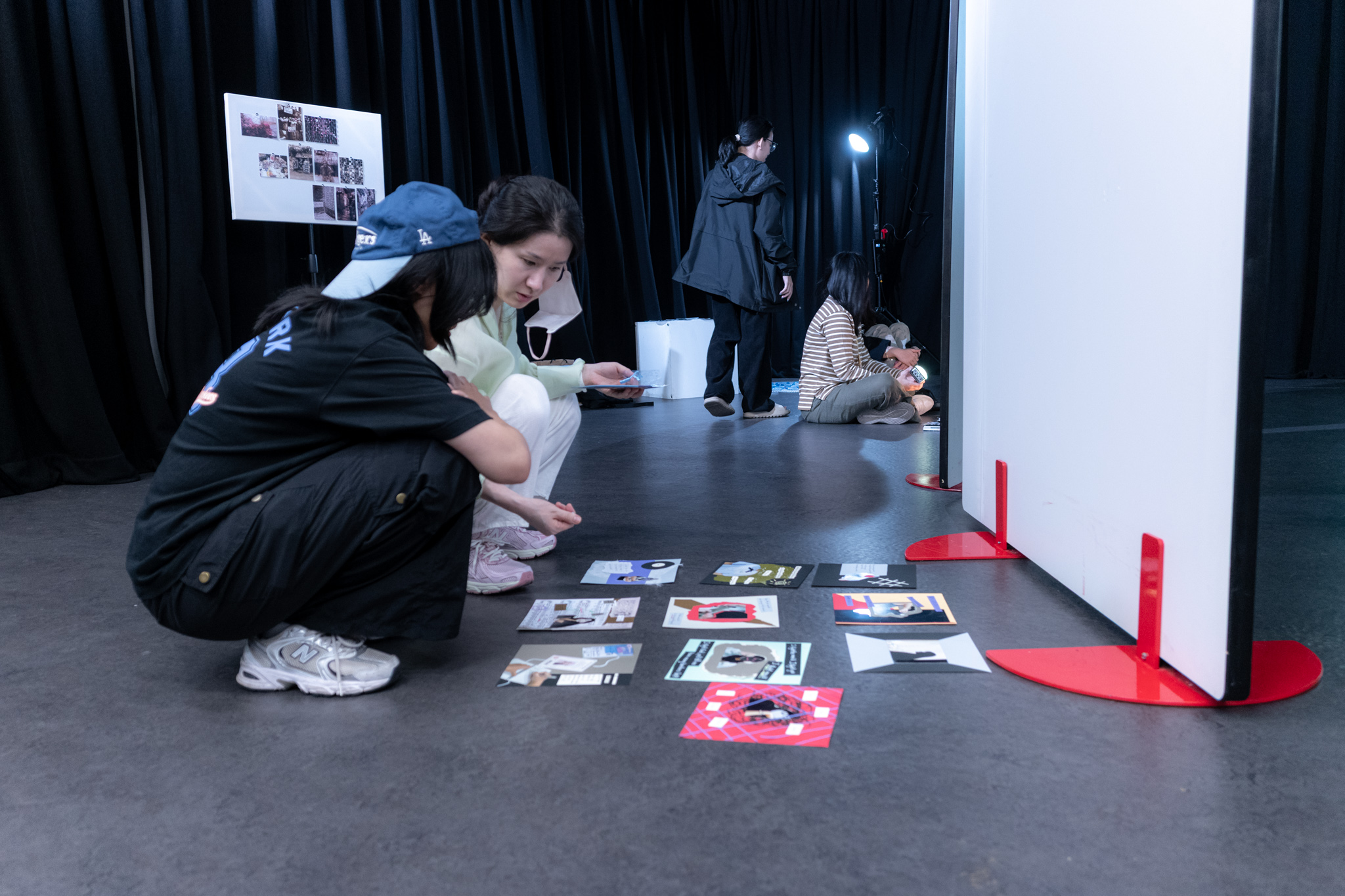
Photographs being arranged on the floor
Prints on the floor. Makes the viewer crouch, look down, move carefully among the work.
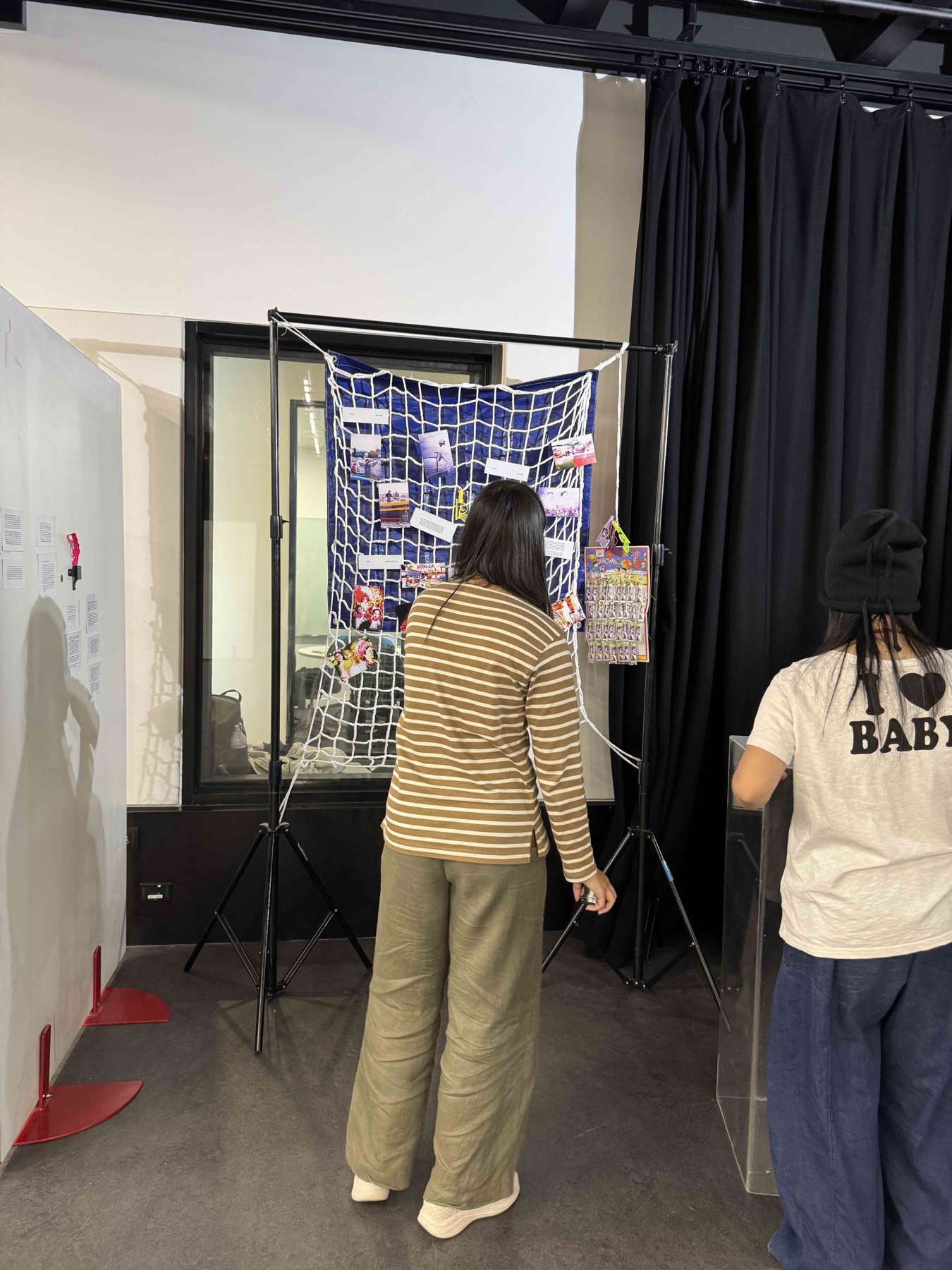
Net installation with visitors reaching in
Net installation, participatory. Crossing its threshold requires the viewer to physically engage.

The point is not that you need to build a net or hang fabric from the ceiling. The point is that each spatial decision creates a different kind of encounter. Small prints invite intimacy. Work on the floor asks for physical attention. Objects that can be held create a one-to-one relationship between the viewer's hands and the work.

The question is not: where do I put this? The question is: what do I want the person standing in front of my work to feel, and what does that feeling ask of their body?

Option A
Installation-Based

Placing or mock-installing your work in the Media Studio. Prints pinned to a panel, objects on a pedestal or floor, or a rough spatial arrangement. Best for work that depends on scale, texture, or physical proximity to be felt properly.

Option B
Slide-Based Sharing

A low-pressure verbal walkthrough using images on a screen, with minimal or no text. Best for work that benefits from narration, historical context, or a sequence that cannot be read from a single image.

Neither option is more serious than the other. The choice should follow the work, not the other way around.

Activity 02
The Spatial Conversation

Find a partner. Share your honest sentence from Activity 1 with them. Then work through these questions together:

What does someone's body do when they encounter your work at its best, do they stand still, lean in, walk around, reach for something, sit down? Does the work need to be seen all at once or discovered piece by piece? What does it feel like to share the space around your work with other people? Option A or Option B, and why?

This is not a final decision. It is a way of thinking out loud about what your work needs before committing to a format.

10 min · pairs
04

Exhibition Ready and Logistics

15 min
Before Week 12

Regardless of format, check:

  • File resolution is sufficient for the intended output size
  • Color profiles are correct, sRGB for screen; check with the lab for print specifications
  • Physical materials for Option A are sourced: tape, pins, frames, backing, borrowed objects
  • If you are printing: place orders now, not the night before
Send This by Thursday 12 PM

Send an email before the session. This allows time to organize the Media Studio layout and make sure your needs are ready in advance. If you are planning an installation, this deadline is especially critical, your space assignment depends on it.

Activity 03
The Opening Line

Imagine a visitor pausing in front of your work during next week's session. That person does not know your project. They are curious.

Write two sentences you would say to that person to introduce your work. Then say them out loud to your partner.

The goal is not a performance. It is just the comfort of hearing your own words before the moment arrives.

5 min · pairs
05

Before You Go

5 min

Your next steps before Week 12:

  • Email plan due Thursday 12 PM, especially important if you are planning an installation
  • Print or finalize files based on your chosen format
  • Bring the work as it currently is

"Next week is not a verdict. It is a chance to see your work in a room, with other people, for the first time. That moment is worth showing up for."

Bring any questions about the space or logistics to class.

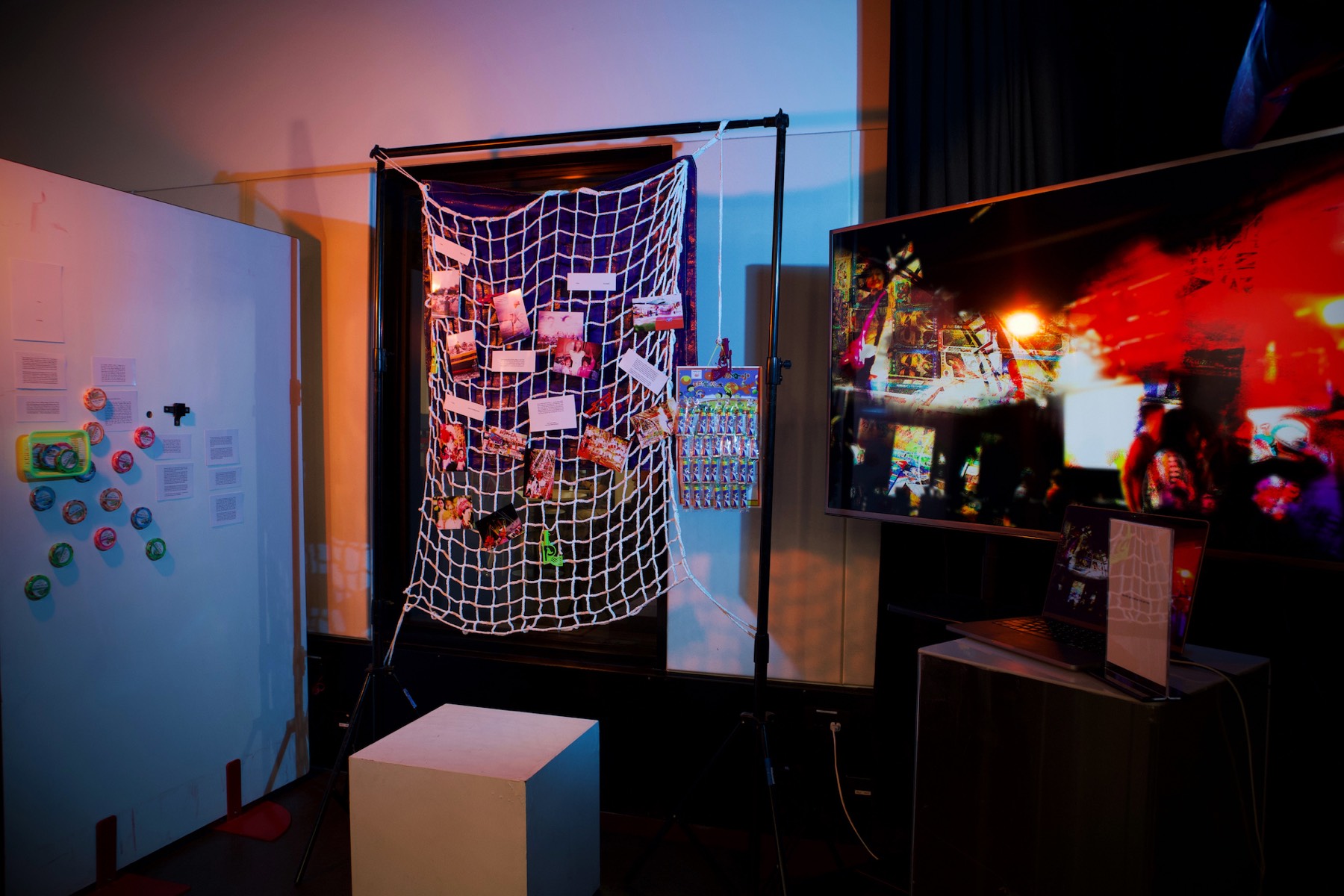
Installation space with net work and screen, rễ-root exhibition
rễ-root · Installation in the Media Studio · RMIT Vietnam
From Last Semester
Last Semester's rễ-root

These eight students from last semester took very different approaches. Let their work spark ideas for yours.

Anh Le Duc
Vị Nhà · Tastes Like Home
Sensory connection to home through scent and texture, the bánh tráng dừa that defines the feeling of returning.
Intimate, object-scale
An Do Le Gia
Childhood Reclaim
Five senses and diverse image-making techniques to reclaim the wonder of a lost childhood. Invites the audience to experiment together.
Net installation · participatory · interactive
Trần Quốc Hào
The Bond
Physical objects and artifacts as evidence of the reciprocal relationship between humans and environment, how we shape the world and how it shapes us in return.
Object study · small-scale arrangement
Trần Khiết Nghi
the liminal self
Creating from where uncertainty and self-discovery coexist, intentional gestures as a quiet reclamation of the body as a site of strength and memory.
Cyanotype hanging structure · vertical · translucent
Ton
There Is A Place I Can't Enter
The realm between physical reality, the present, and the past, exploring cultural heritage across film, sound design, 3D, and fashion.
Multi-medium · TV screen · collage panels
Emma
i miss
A longing for childhood people and spaces. Specific images may fade with time, but the underlying feelings never do.
Wall-based photograph arrangement
Alicia Ý Huỳnh
INTRA-SELF, INTER-SELF
Shōkakkō, life's beauty found in the small and mundane. A meditation on the entangled relationship between the self and the others that shape our identity.
Photozine as held object
Florin Schroth
Layers of Life
Signs of usage give a garment character. The lifecycle of vintage clothing, worn, torn, eventually valued, and the experience of wearing the identity of another.
Clothing rail · floor scatter · 1-metre sculpture